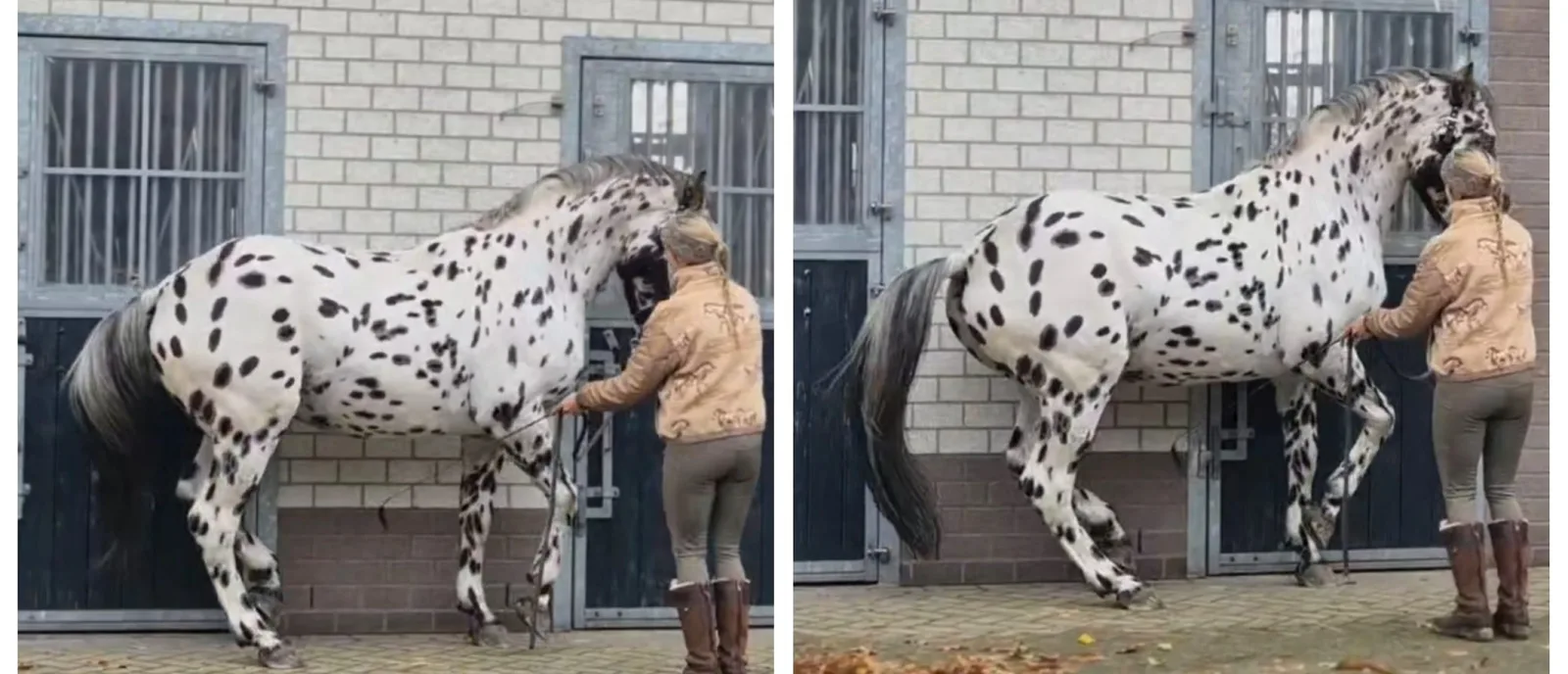
The Magic Behind the Piaffe: Exploring Strength, Balance and Connection Together
A glimpse into my training with Nevada, where small exercises, creativity and body awareness come together.
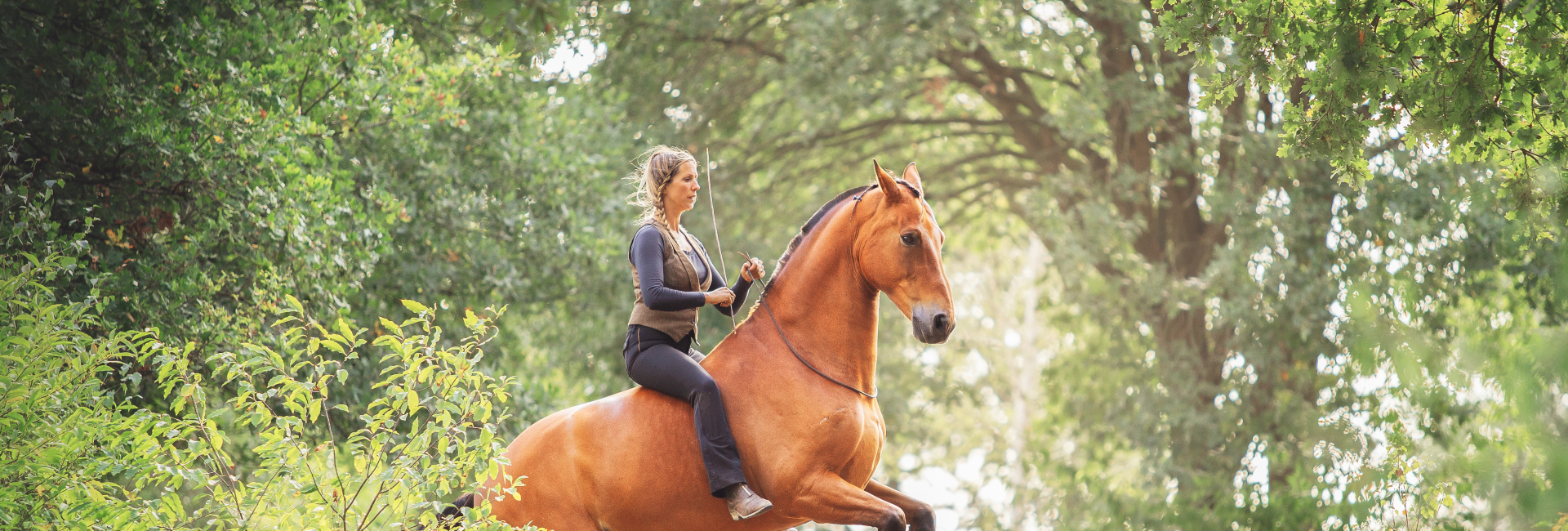
For me, the piaffe is so much more than a beautiful dressage movement. It's a wonderful way to help a horse better understand his own body, develop strength and discover greater balance and connection.
With Nevada, we're going through an incredibly interesting journey. Relaxing and lengthening his body come much more naturally to him than engaging his muscles and carrying himself with spring and elasticity. Lifting his back while carrying weight behind and connecting his body from back to front is a real challenge for him. So what he's already trying to achieve is quite remarkable!
To develop this elastic carrying power, his abdominal and deep back muscles need to work together with the muscles of his hindquarters. They help support his trunk and allow him to absorb weight through his flexed hind legs. A horse that finds this easier by nature already has a lovely foundation for developing greater carrying power and expression. With Nevada, we're discovering this step by step.
And that's exactly what I love about being a trainer: staying curious. How can you help a horse discover something that is physically difficult for him, without losing his relaxation?
Body Awareness Begins with Small Movements
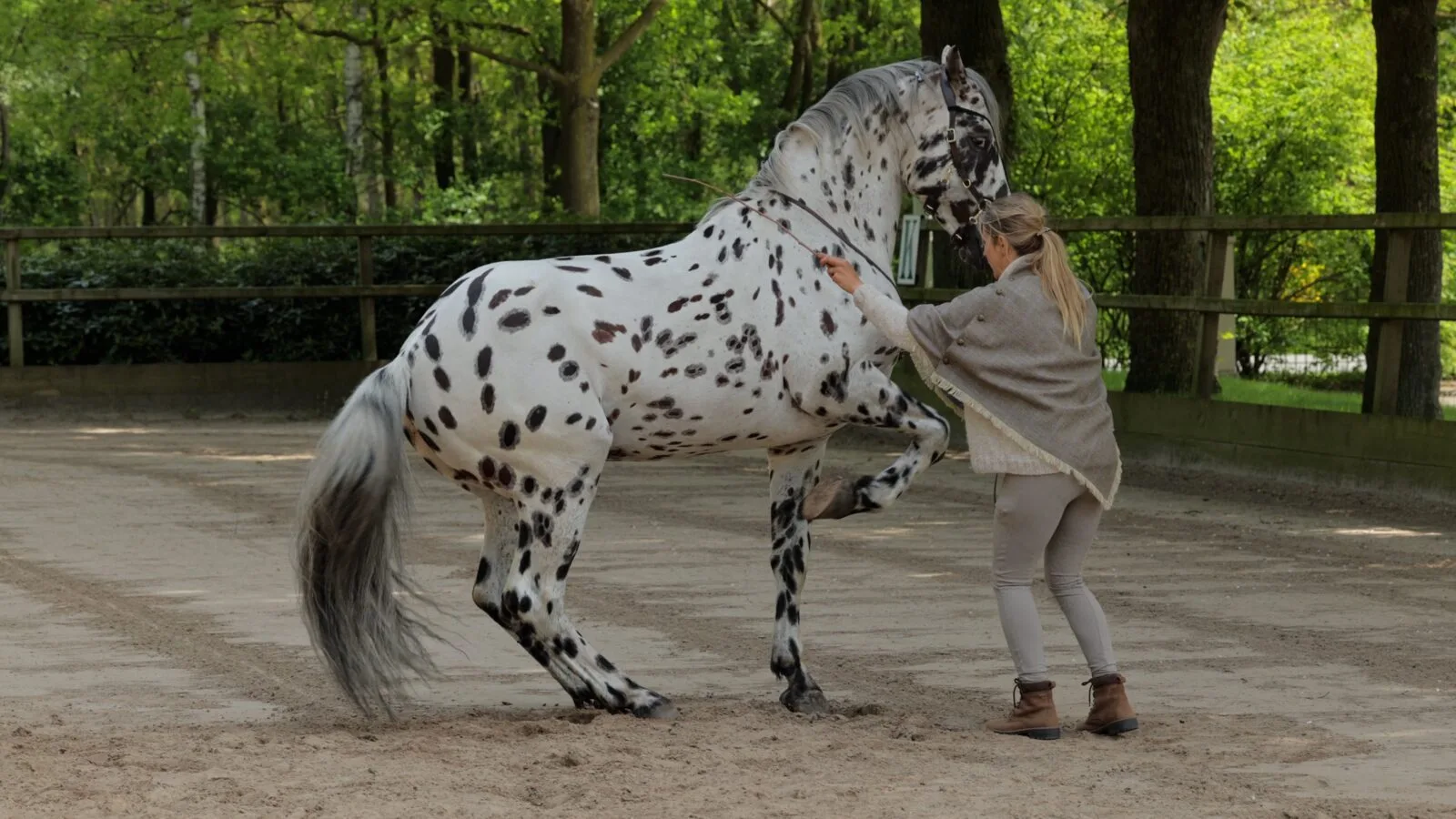
To help Nevada become more aware of his hind legs and their range of motion, I ask him to lift his hind legs alternately and sometimes hold them briefly in position.
Meanwhile, I observe the rest of his body. How does his back respond? What happens in his neck? Where does he compensate, and where does movement become easier? By slightly changing his starting position, I can subtly adjust what I'm asking of him.
Would you like to try this with your own horse? Start with something small that your horse already understands. Simply lifting a leg calmly and placing it back down while maintaining balance can already be a valuable exercise.
I also use Guasha, balance pads and bodywork to support his body. I pay particular attention to the areas around his hocks. I want to keep exploring what his body needs to move with greater ease.
The Mountain Goat: A Small Piece of the Puzzle with Great Value
The mountain goat exercise is incredibly valuable for Nevada at the moment. It helps him become more aware of placing his hind legs underneath his body and discovering a different balance.
From this position, we practise transitions into piaffe. For example, I pay attention to whether he steps outward with his left hind leg before making the transition.
Transitions are difficult, but that's exactly what makes them so valuable! They require coordination, balance and confidence. When Nevada begins to understand the transition better, I often notice that the piaffe itself becomes easier too.
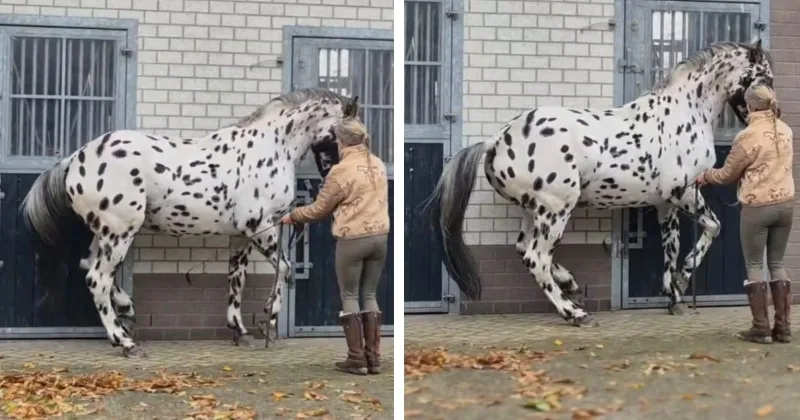
In the photo sequence, you can see that he sometimes lengthens his body in between and would rather step forward. Instead of immediately asking for more impulsion, I can use the mountain goat exercise to help him rediscover his balance and connection.
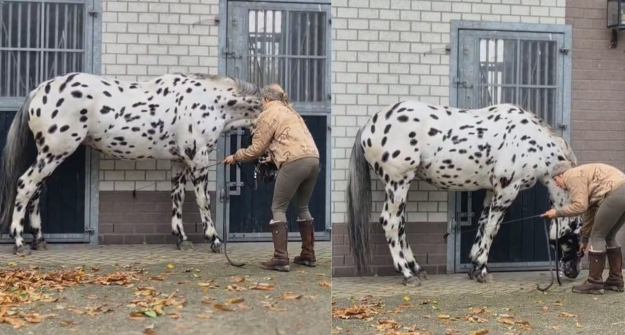
Bringing his hind legs further underneath his body is an intermediate step. From there, we look for that elastic ability to take on and carry his weight. When he manages it, even briefly, I can see the difference in his withers and the way he uses his front legs. Sometimes he almost seems surprised by the strength he suddenly discovers!
Reward that first small attempt. Just one lovely transition may be enough for your horse to discover something new. Below, you can see the piaffe before on the left and the piaffe after using the mountain goat exercise on the right.
From the Pedestal to Diagonal Connection
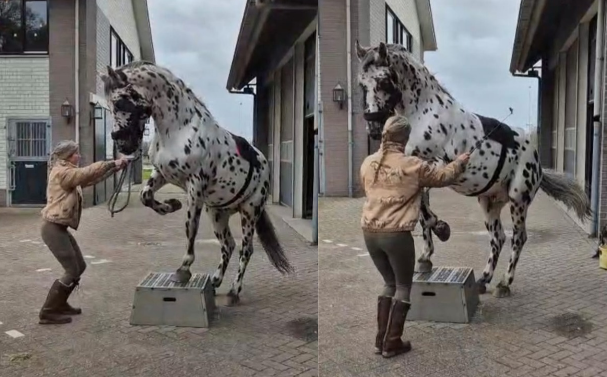
School halts from the pedestal are another enjoyable challenge for Nevada. Finding and maintaining his balance from this position requires body control, coordination and stability. We've built this up in small steps.
We also incorporate the Balance Circle into our training, particularly when working on diagonal connections.
Once the diagonal coordination is well established at a standstill, you can practise a few short steps in shoulder-fore along the arena wall or on the Balance Circle. From there, you ask the inside hind leg to lift consciously in rhythm with the outside front leg.
This allows you to explore diagonal coordination without constantly asking for the complete piaffe. Begin with just a few steps and observe whether your horse understands the request and remains relaxed.
That's what I love about these exercises: you can improve the quality of a movement simply by giving attention to one small element.
Learning to Breathe Through the Power
I teach all my horses to snort on cue. I also use this during more advanced exercises as a familiar moment to release tension.
Nevada knows this very well from the stretch piaffe. We're now practising it while maintaining a more elevated posture. I encourage him to keep the connection within his own body while snorting, rather than immediately lengthening his frame. The latter is his natural preference.
Sometimes he becomes a little hectic while searching for the right feeling. When that happens, I make the request smaller and give him space to discover it. And when he succeeds, he's incredibly proud and comes over for his cuddle.
From enormous warhorse energy to the sweetest cuddle bear in just a few seconds. That's Nevada!
At our Academy, we often describe switching between different energy levels as working with the thermostat. We want a horse to be able to use his strength and then easily return to relaxation.
You can already introduce this in basic training: alternate a small, active request with relaxed walking or a short break. Learning to switch back to a calmer energy level is also something worth practising and rewarding.
Watch the training video below, where all these exercises come together:
Training Nevada
When In-Hand Training Comes Together with Riding
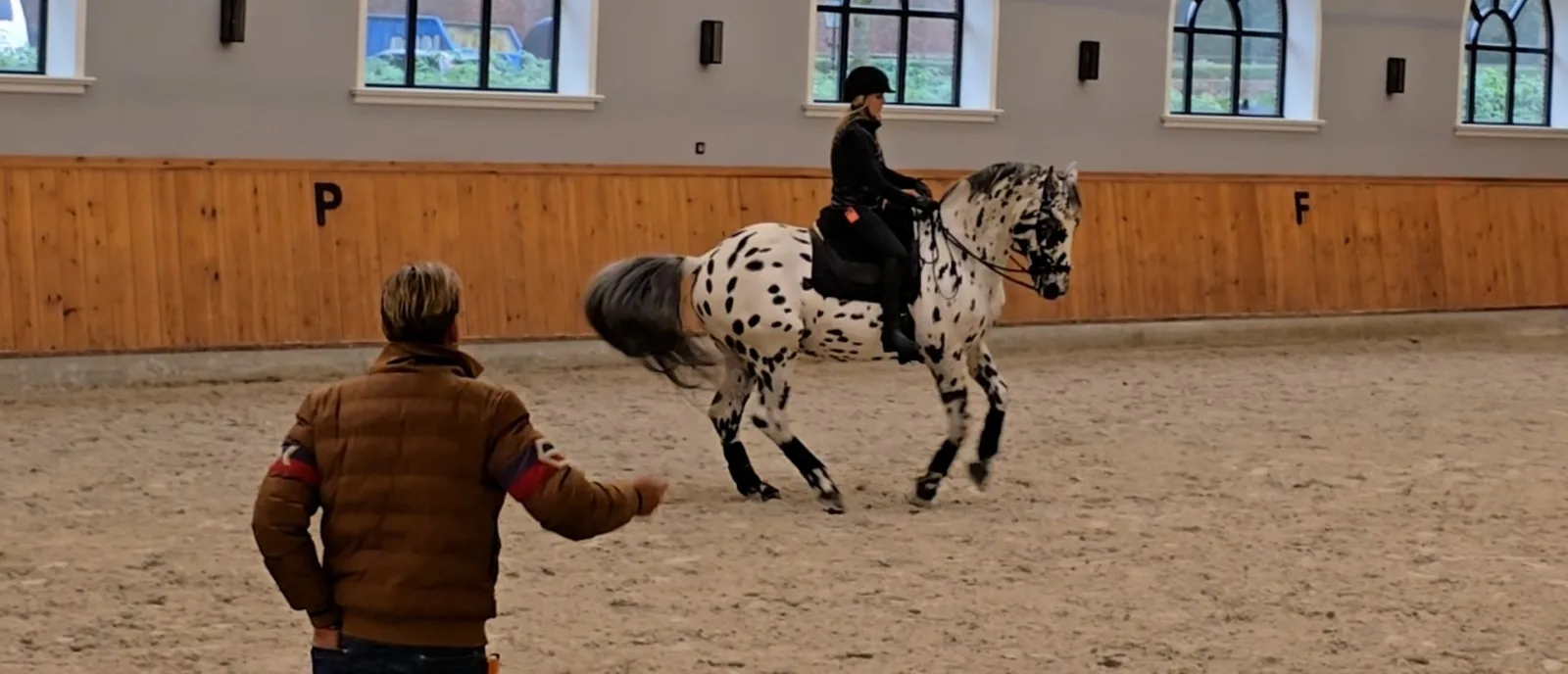
During our latest lesson with Edward, we experienced some beautiful moments. Although we hadn't been able to ride much and had instead focused on small, refined exercises in hand, I could really feel how everything was beginning to come together.
Nevada used his hind legs more consciously, even during the flying changes. Sometimes he suddenly produced such a big, expressive change that he almost seemed startled by it himself. Even though it was actually a really good change!
I recognise this from our in-hand work. When he discovers just how much strength and freedom of movement he has, his confidence sometimes needs a little time to catch up.
We also include the Spanish walk and conscious front leg exercises in our training. Think of stepping onto the pedestal and performing lateral movements in Spanish walk, with attention to energy, coordination and body awareness.
I'm noticing that his neck is gradually becoming more elevated from the withers, and I can feel changes when riding him too. It's still a very delicate balance: when is he truly carrying himself with a soft back? When does the elevation become too high? And when does he seek so much length that he loses the connection?
To the right, this remains more difficult. The scar near his withers is also something we need to keep in mind. That's why those little moments when he moves more softly and easily make me so incredibly happy.
Staying Curious
Nevada continues to remind me that progress doesn't always come from repeating an exercise more often.
Sometimes, a different question makes all the difference: a few conscious steps, a small balance challenge or a moment of relaxation. It takes creativity, patience and the ability to really observe the horse in front of you.
You can explore this with your own horse, too. What comes naturally to him? Where does he struggle? And how can you make your request small enough for him to experience another little success?
For Nevada, even a brief moment of carrying himself with elasticity can be an enormous achievement. And when he comes over for his cuddle afterwards, I'm reminded once again why I love this work so much.
For us, the piaffe is a journey towards greater body awareness, carrying power, confidence and expression. Step by step, always curious about what's possible.
With love,
Greetje & Nevada ❤️
Founder of Human & Horse Academy in Kootwijkerbroek, the Netherlands, and creator of the Human & Horse Method and guasha therapy for horses. She trains with her own herd every day and educates trainers, instructors and guasha therapists. More about Greetje